 93
93

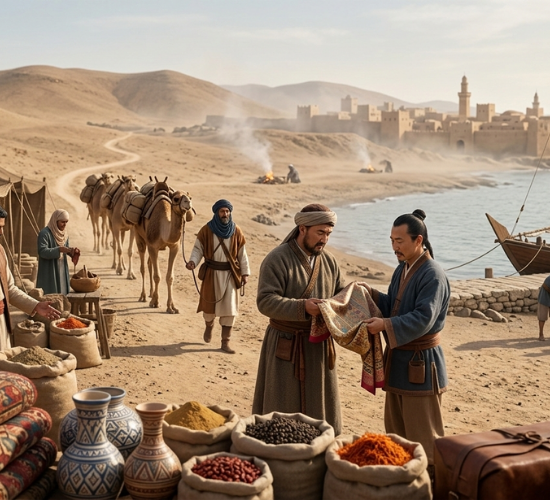
Want to understand how the world became connected long before today’s internet age? As you explore global links, you see how trade, travel, and ideas connected distant societies. You learn that globalisation has deep historical roots and shaped everyday life across regions. You reflect on how goods, people, and knowledge moved across oceans and continents. This learning connects with India and the Contemporary World – II, Chapter The Making of a Global World, NCERT.
As you read closely, you build strong reading and vocabulary by identifying key ideas about pre-modern trade routes like the Silk Routes. You observe how exchanges of crops and cultures changed diets and habits across the world. You connect examples to concepts to deepen your understanding of historical change. This practice builds clarity in social science learning.
When you compare different phases of globalisation, you strengthen problem-solving and cognitive skills. You think about how conquest, disease, and trade reshaped societies. You evaluate how industrial growth and technology expanded global flows of goods, labour, and capital. This helps you form balanced views about progress and inequality.
 1
1 1
1 20
20 1
1 40
40 20
20 1
1 20
20 46
46 1
1


 G10
G10 Social Science
 Political Science Concepts
 Thinking Skills
 Observation Skill
 Cognitive skill