
 88
88Nationalism in India


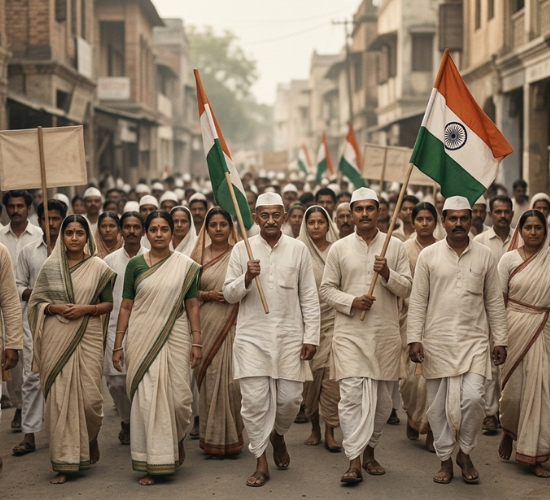
Want to understand how people across regions and communities came together for freedom? As you explore nationalism in India, you see how shared struggles against colonial rule created a sense of unity. You learn how new ideas, symbols, and movements shaped people’s identity and belonging. You reflect on how unity can grow even when experiences are different. This learning connects with India and the Contemporary World – II, Chapter Nationalism in India, NCERT.
As you read closely, you build strong reading and vocabulary by identifying key ideas like satyagraha, non-cooperation, and civil disobedience. You observe how peaceful resistance mobilised people across towns, villages, plantations, and forests. You connect examples to concepts to deepen your understanding of collective action. This practice builds clarity in social science learning.
When you compare different phases of the movement, you strengthen problem-solving and cognitive skills. You think about why movements expanded after World War I and how events like the Rowlatt Act and Jallianwala Bagh shaped public anger. You evaluate how strategies changed from non-cooperation to civil disobedience. This helps you form balanced views about leadership and mass participation.


 G10
G10 Social Science
 Political Science Concepts
 Nationalism
 Thinking Skills
 Observation Skill
 Cognitive skill
 40
40 20
20 36
36 40
40 40
40 40
40 47
47 40
40 40
40 40
40