Spotting Bias in Texts


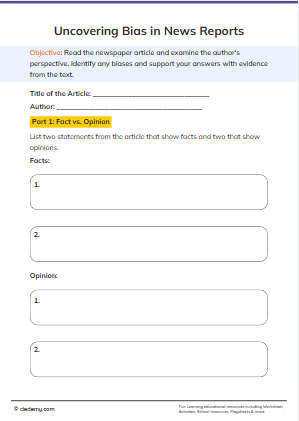
Bias appears when a text favors one side, opinion, or group more than another, and this playsheet helps you learn how to recognize it. Instead of accepting information at face value, you learn to look for clues about the author’s point of view. Bias can change how facts are presented or influence how readers feel about a topic. Understanding bias helps you read responsibly and make informed decisions. Once you know what to look for, spotting hidden opinions becomes much easier.
You will explore how writers use tone, word choice, and selective facts to shape your thinking. For example, describing someone as brave creates a different impression than calling them reckless. Even though both words refer to a similar action, they carry different feelings. This playsheet teaches you how emotional language, exaggeration, or missing information can signal bias. Learning these techniques helps you become a more alert and thoughtful reader.
This playsheet also encourages you to question the purpose of a text. You will ask yourself who the author is, why they wrote the piece, and what they want readers to believe. Sometimes bias appears when only one side of an issue is shown. By looking for ignored viewpoints, you can tell whether the information is fair. These strategies help you understand that every text has perspective—even nonfiction.


 G6
G6 G7
G7 G8
G8 English
 Literature
 Educational Skills
 Thinking Skills
 Vocabulary skill
 Reading Skill
 Critical Thinking