"Harlem"


Have you ever had a dream so important that giving up on it felt impossible? Langston Hughes’ poem “Harlem” invites you to explore what happens when dreams are postponed rather than pursued. This playsheet guides you through the poem’s powerful language and vivid imagery, helping you uncover the emotional and cultural messages hidden within each line. You discover that a short poem can hold big ideas about hope, frustration, and possibility.
As you complete each activity, you’ll start by examining the poem’s central question: “What happens to a dream deferred?” You’ll explore how the poet uses comparisons—called similes—to paint pictures in your mind. You’ll notice words like dry up, rot, or explode, and think about how each image reflects different emotional outcomes. You learn that the poem doesn’t give just one answer—it gives many, encouraging you to think deeply.
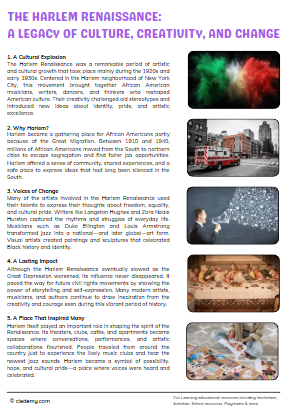
Next, you’ll explore how the poem connects personal dreams to larger social issues. You’ll learn that Hughes wrote during a time when many African Americans were denied opportunities, and dreams were often pushed aside. You’ll begin to see how dreams can represent goals, freedoms, or equality. You discover that the poem is not just about individuals—it’s about communities longing for change.


 G6
G6 G7
G7 G8
G8 English
 General Concept
 Literature
 Poem
Poem Question Answer
 Thinking Skills
 Educational Skills
 Analytical Thinking
 Reading Skill
 Writing Skill