
 37
37Rebels and the Raj: 1857 Revolt and Its Representations


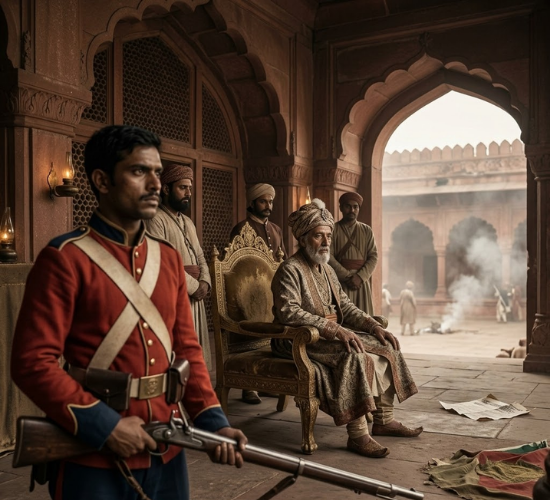
Do you want to understand why 1857 became one of the most powerful uprisings in Indian history? In Themes in Indian History – Part III, Chapter “Rebels and the Raj: The Revolt of 1857 and Its Representations” from the NCERT curriculum
you explore how sepoys, peasants, taluqdars, and rulers challenged British authority. As you attempt this quiz, you begin to connect events, emotions, and political tensions.When you study the outbreak at Meerut and the march to Delhi, you analyze how Bahadur Shah Zafar became a symbolic leader. You examine rumours about greased cartridges, annexation policies, and revenue settlements, helping you understand how fear, faith, and economic hardship combined to spark revolt.
As you explore Awadh, the role of taluqdars, Rani Lakshmi Bai, Nana Sahib, and Maulvi Ahmadullah Shah, you discover how leadership emerged from different sections of society. This strengthens your ability to compare perspectives and interpret historical evidence critically.


 G12
G12 History
 History Concepts
 Life Skills
 Thinking Skills
 Observation Skill
 Research Skill
 40
40 40
40 40
40 20
20 1
1 51
51 10
10 40
40 20
20 20
20