
 50
50On the Trail of the Earliest People


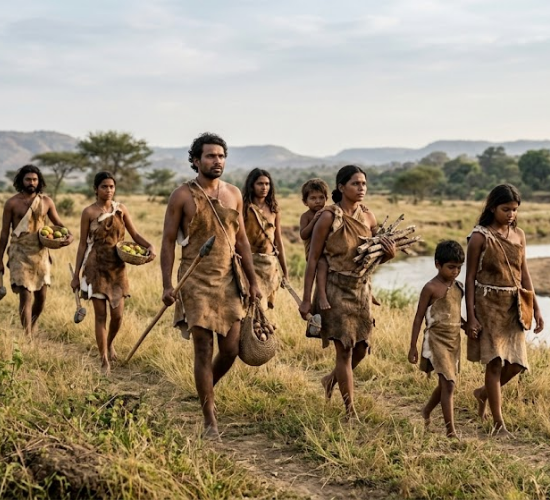
When you explore Our Pasts – I, Chapter “On the Trail of the Earliest People”, NCERT, you begin to imagine how early humans lived as hunter-gatherers. You notice how people moved from place to place in search of food, water, and safe shelter. You reflect on how seasons, animals, and rivers guided their daily journeys. This learning helps you see how survival shaped early human life.
As you read closely, you strengthen your reading and vocabulary by learning words like hunter-gatherer, archaeological site, palaeolithic, mesolithic, and neolithic. You observe how stone tools were shaped to cut meat, scrape skins, and chop wood. You connect these ideas to how tools made daily tasks easier and safer. This practice builds clarity in history learning. Your confidence grows as you connect terms with real examples.
When you examine how archaeologists learn about early people, you build problem-solving and cognitive skills. You think about how tools, ash from fires, and remains found at sites help reveal past life. You evaluate why caves and rock shelters near rivers were chosen as living places. You begin to form balanced views about how evidence helps us rebuild long-ago stories. This helps you understand how history is discovered.


 G6
G6 Social Science
 Thinking Skills
 Observation Skill
 Cognitive skill
 40
40 40
40 40
40 40
40 40
40 40
40 40
40 40
40 40
40 40
40