 40
40

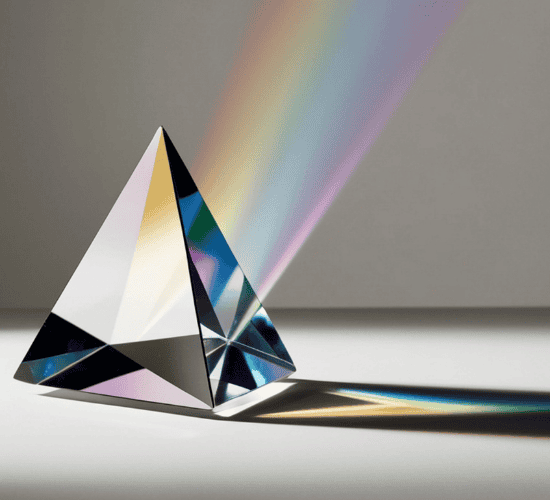
When you explore Class 10 Science, Chapter “Light – Reflection and Refraction”, GSEB, you begin to understand why you can see objects only when light reflects from them into your eyes. You notice how mirrors form images and how light changes direction when it passes from air into water or glass. You reflect on how these everyday effects explain shadows, reflections, and bending of light. This learning helps you connect daily experiences with basic ideas of light.
As you read closely, you strengthen your reading and vocabulary by learning words like incident ray, reflected ray, normal, refraction, and refractive index. You observe how the angle of incidence equals the angle of reflection and how Snell’s law explains bending of light. You connect these ideas to why a pencil looks bent in water and why a glass slab shifts images sideways. This practice builds clarity in science learning. Your confidence grows as you connect terms with real examples.
When you examine spherical mirrors, you build problem-solving and cognitive skills. You think about how concave mirrors can form real or virtual images depending on object position, while convex mirrors always form virtual, erect, diminished images. You evaluate why rear-view mirrors in vehicles are convex to give a wider field of view. You begin to form balanced views about choosing the right mirror for the right task. This helps you understand real-world design choices.
 India
India Light - Reflection and Refraction
 GSEB Class 10 All Subjects Solutions
 English
 Science book class 10 GSEB Solutions
 40
40 40
40 40
40 20
20 1
1 51
51 10
10 40
40 20
20 20
20
 G10
G10 Science
 Thinking Skills
 Cognitive skill
 Creative Thinking