 40
40

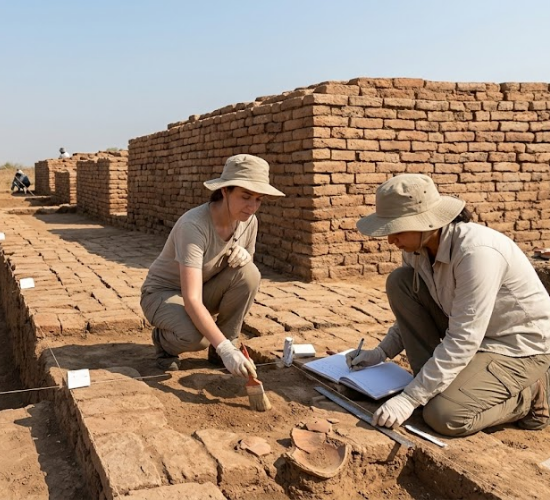
When you explore Our Pasts – I, Chapter “In the Earliest Cities”, NCERT, you begin to imagine how people lived in carefully planned Harappan cities. You notice how cities were divided into the citadel and the lower town, with strong baked-brick walls and straight streets. You reflect on how covered drains and wells helped keep the city clean and organised. This learning helps you see how planning made daily life easier.
As you read closely, you strengthen your reading and vocabulary by learning words like citadel, drainage, seal, and specialist. You observe how houses were built around courtyards and many had bathing areas connected to drains. You connect these ideas to how smart design supports health and hygiene. This practice builds clarity in history learning. Your confidence grows as you connect terms with real examples.
When you examine how people worked and traded, you build problem-solving and cognitive skills. You think about how craftspeople made beads, seals, pottery, and tools from stone and metal. You evaluate how raw materials like copper, tin, and precious stones were brought from distant places. You begin to form balanced views about how trade networks supported city life. This helps you understand early economies.
 40
40 20
20 1
1 1
1 1
1 1
1 40
40 1
1 1
1 20
20


 G6
G6 Social Science
 Thinking Skills
 Memory Skill
 Observation Skill