
 35
35Crop Production And Management


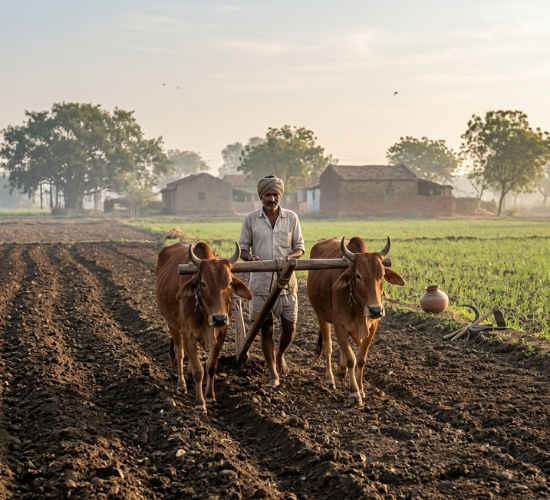
When you explore Science, Chapter “Crop Production and Management”, NCERT, you begin to understand how the food on your plate is produced. You notice that growing crops is not a single activity but a series of carefully planned steps. You reflect on how farmers prepare the soil, select seeds, sow them, add manure and irrigate the fields. This learning helps you see agriculture as a systematic scientific process.
As you read closely, you strengthen your vocabulary by learning words like kharif, rabi, irrigation, manure, fertiliser and weeding. You observe how crops are grown in different seasons and why paddy requires more water than wheat. You connect how tools like plough, hoe, seed drill and cultivator make farming efficient. This builds clarity in understanding modern and traditional agricultural practices.
When you examine soil preparation and the role of manure and fertilisers, you develop analytical thinking. You think about how continuous cropping reduces soil nutrients and why crop rotation is important. You evaluate the difference between organic manure and chemical fertilisers. This helps you understand soil fertility and sustainable farming practices.


 G8
G8 Science
 Thinking Skills
 Observation Skill
 Cognitive skill
 40
40 40
40 40
40 20
20 1
1 51
51 10
10 40
40 20
20 20
20